
Planning Guides
Electric vs Wood-Fired Sauna: Which Is Better?
Updated October 2024 · 9 min read
This is one of the most debated questions in the sauna world. Electric is convenient; wood-fired is authentic. But the right answer depends heavily on your situation, budget, and what you want out of the experience.
Quick Verdict
Electric wins for convenience, control, and urban/suburban installs. Wood-fired wins for the authentic experience, off-grid capability, and that irreplaceable wood-smoke ambiance. Neither is objectively better it depends on you.
Side-by-Side Comparison
| Factor | Electric | Wood-Fired |
|---|---|---|
| Heat-up Time | 30–45 min | 45–90 min |
| Temperature Control | Precise digital control | Manual takes practice |
| Installation | Electrician needed for 240V | Chimney/flue required |
| Operating Cost | $1–2 per session (electricity) | Cost of firewood (varies) |
| Maintenance | Very low occasional rock replacement | Regular ash cleanup, chimney inspection |
| Experience | Consistent, reliable | Ritualistic, unpredictable (in a good way) |
| Off-Grid Capable | No | Yes |
| Steam (löyly) | Yes pour water on rocks | Yes superior steam quality |
| Smell | None | Wood smoke aroma |
| HOA/Code Issues | Rarely | Sometimes (smoke/fire restrictions) |
| Upfront Cost | $400–$1,500 (heater) | $300–$2,000 (stove + flue) |
The Case for Electric
Electric sauna heaters are the dominant choice for a reason. You set the temperature, walk away, and come back to a perfectly heated sauna. No fire-building ritual, no ash cleanup, no waiting for the wood to catch. For most suburban homeowners who want to sauna 3–4 times a week, electric is the pragmatic choice.
Modern digital controls let you schedule your sauna via an app, set precise temperatures, and get alerts when it's ready. You can't do any of that with wood.
The Case for Wood-Fired
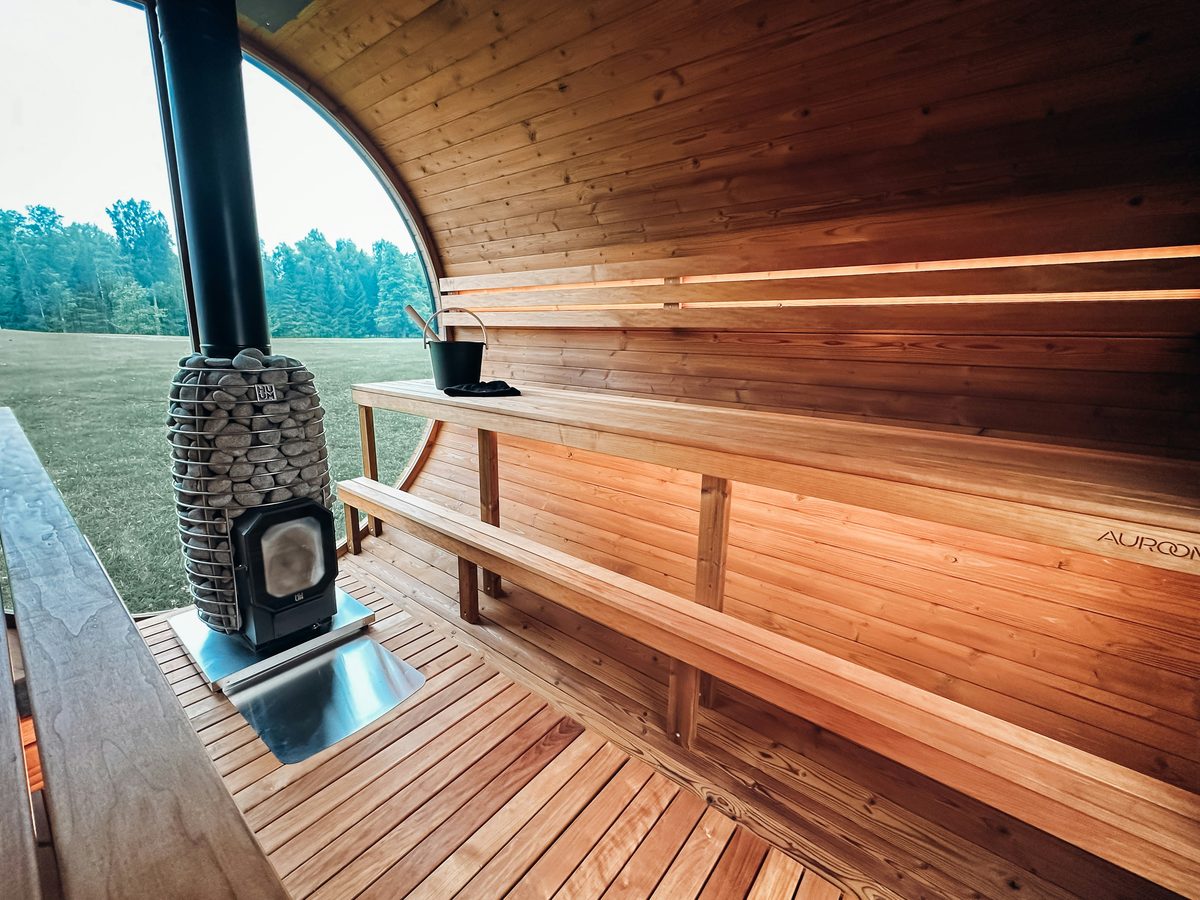
Ask any Finnish sauna purist and they'll tell you: wood-fired is the real thing. Building the fire is part of the ritual. The smell of wood smoke, the crackling sound, the radiant heat from a wood stove it creates an experience that electric simply can't replicate.
The steam quality is also noticeably different. Water poured on a wood-fired sauna stove produces a softer, silkier steam (called löyly) that many sauna enthusiasts swear is superior to electric-generated steam.
And if you have a rural property with abundant firewood, your operating costs approach zero.
Choose Electric If…
- You're in a suburban/urban area
- You want maximum convenience
- You sauna frequently (3+ times/week)
- HOA or fire codes limit wood burning
- You want to pre-schedule sessions
Choose Wood-Fired If…
- You want the authentic experience
- You have rural property with firewood
- You're off-grid or want to be
- No 240V service available
- The ritual matters to you
Our Top Electric Heater Pick
Harvia KIP-60W with Xenio Digital Controls
Finnish-made, 6kW, handles up to 300 cubic feet. Includes sauna stones and digital wall controller. The most reliable electric heater we recommend.
Check Price on Amazon →FAQs
Can I convert from electric to wood-fired later?
Yes, but it's not trivial. You'll need to add a proper chimney/flue system and potentially enlarge the heater opening. Better to decide upfront.
Is wood-fired sauna legal everywhere?
No. Some municipalities, HOAs, and fire districts restrict wood-burning appliances especially during fire season or in dense neighborhoods. Check before you buy a wood stove.
Which gets hotter?
Both can reach 190°F+. Wood stoves often produce a more intense dry heat; electric is more consistent. In practice, temperature ceiling isn't a real differentiator.
Is wood-fired more dangerous?
Only if improperly installed. A correctly installed wood stove with proper clearances and a code-compliant chimney is very safe. Don't DIY the flue without understanding the requirements.
Ready to See Our Full Heater Rankings?
We've tested and ranked the best electric sauna heaters across every price point.
Best Electric Sauna Heaters →