
Heater decision guide
Electric vs Wood Sauna Heater: Start With the Site
Reviewed August 2026 · Planning guide, not an installation manual
The best heat source is the one your room and property can support safely. Before comparing atmosphere or controls, check power, chimney routing, clearances, approvals, ventilation, and the complete installed scope.
A useful first screen
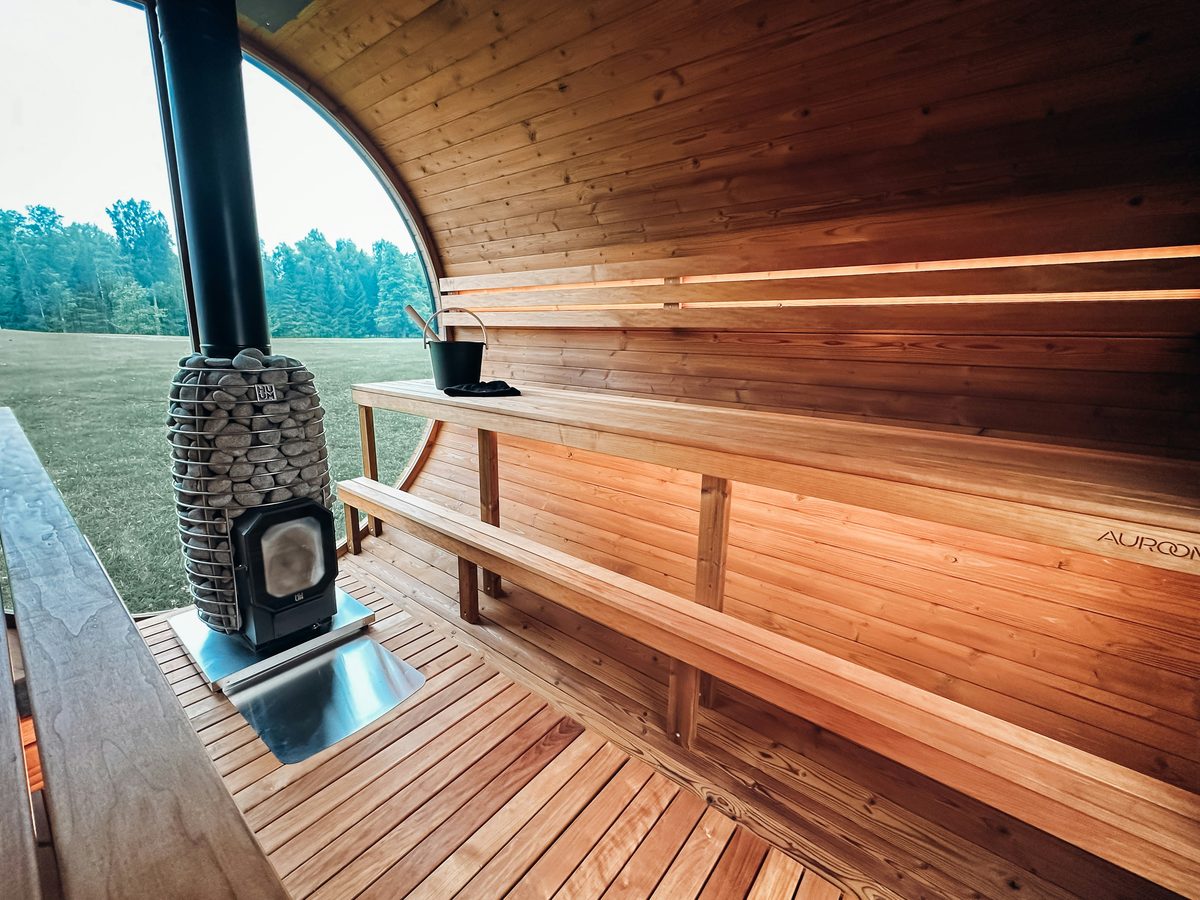
Electric usually fits better when the property can support the specified circuit and the owner values predictable controls. Wood may fit better when the exact room accepts a listed stove and there is a viable chimney, clearance, fuel-storage, and local-approval path. A preference is not a site assessment.
Compare the requirements, not a generic winner
| Decision | Electric heater | Wood-burning heater | Verify before purchase |
|---|---|---|---|
| Energy path | A dedicated high-voltage circuit is common for installed home heaters. | The fire supplies heat, but lighting or accessories may still use power. | Exact heater manual, panel capacity, utility route, and other loads. |
| Installation path | Heater, controls, sensor, wiring, disconnect, and required electrical work. | Stove, chimney system, wall or roof penetration, shielding, floor protection, and combustion air. | Complete equipment list, qualified trades, permits, inspections, and insurer requirements. |
| Controls | Model-dependent built-in or separate controls; remote features are not universal. | Heat output is managed through fuel loading and combustion controls. | Control package, placement rules, operating instructions, and remote-use restrictions. |
| Room fit | Manufacturer room-volume range, glass correction, clearances, and sensor location. | Manufacturer room-volume range, clearances, chimney connection, guards, and ventilation. | The exact room dimensions and all non-insulated surfaces. |
| Routine work | Inspect stones and equipment and follow the maintenance schedule. | Store dry fuel, tend the fire, remove ash, and maintain the chimney as required. | Owner manual, chimney service plan, fuel source, and safe ash handling. |
| Operating cost | Power x estimated full-load hours x local electricity rate gives a planning ceiling. | Fuel price alone misses storage, handling, chimney service, and owner time. | Local rates, actual use pattern, weather, room performance, and maintenance. |
| Off-grid use | Requires a power system sized for the heater and coincident loads. | Can avoid the electric heating load where the room and stove are approved. | Whole-property power plan and every non-heating electrical load. |
Why model-level details change the answer
Current electric example
Harvia KIP60W
Harvia currently lists this 6 kW, 240 V model for 170 to 300 cubic feet and specifies a separate control unit. Those numbers apply to this item number, not every 6 kW heater or every 300-cubic-foot room.
Current wood example
Harvia Pro 20
Harvia currently publishes a room-volume range plus distinct front, rear, side, and ceiling clearances for this stove. The chimney opening and optional shields affect the layout, so the stove name alone is not enough.
Examples are used to show why exact product data matters. They are not rankings or universal specifications. Confirm the current manual before ordering.
Electric is the stronger candidate when...
- [ ] An electrician has confirmed a practical circuit and equipment route.
- [ ] The selected heater and controls match the room and intended use.
- [ ] Predictable controls matter more than tending a fire.
- [ ] A chimney path is impractical or a solid-fuel appliance is not approved.
- [ ] The owner understands the installation scope and estimated electricity use.
Wood is the stronger candidate when...
- [ ] The exact sauna and stove combination allows wood-burning heat.
- [ ] A qualified installer has identified a compliant chimney and clearance path.
- [ ] Local authorities, the property insurer, and any HOA requirements have been checked.
- [ ] Dry fuel can be stored and moved without creating a fire, moisture, or access problem.
- [ ] The owner accepts fire tending, ash handling, and chimney maintenance.
A six-step decision sequence
- Measure the finished hot room. Record inside width, depth, height, glass, masonry, and other non-insulated surfaces.
- Shortlist compatible heaters. Use the manufacturer's current sizing method, room range, clearances, and approved accessories.
- Test both site paths. Price the electric service and controls. Separately assess the stove, chimney, penetrations, shielding, and floor protection.
- Check the local path. Ask the authority having jurisdiction, qualified trades, insurer, and HOA where applicable.
- Compare complete costs. Include equipment, freight, labor, permits, site work, maintenance, and energy or fuel. Do not compare heater prices alone.
- Keep the final documents together. Retain the approved plan, product manuals, permits, inspection records, photos, and maintenance schedule.
Estimate cost without inventing a universal session price
For electric heat, multiply heater kilowatts by estimated full-power hours and your utility rate. A thermostat can cycle the elements after warm-up, so this is a planning ceiling rather than a guaranteed bill. Wood cost depends on species, moisture, local pricing, storage, firing practice, and the stove-room combination.
Primary sources used
Harvia KIP60W product data
Current US product listing for room range, electrical supply, controls, dimensions, clearances, and certification.
Harvia Pro 20 product data
Current product listing for room range, chimney connections, dimensions, clearances, and accessories.
Finnleo Euro Outdoor Room manual
Current room instructions covering licensed electrical work, heater-manual coordination, and specialized wood-burning installation.
Frequently asked questions
Which heater warms a sauna faster?
Do not decide from fuel type alone. Room construction, outdoor temperature, glazing, ventilation, heater output, stone mass, controls, fuel, and operating practice all affect warm-up.
Does wood always produce better steam?
That is a preference claim, not a universal product fact. Stone quantity, stone temperature, room airflow, water application, and the exact heater all shape the experience.
Can I convert later?
Treat conversion as a new project. Recheck equipment approval, room sizing, clearances, chimney, shielding, floor protection, ventilation, permits, and insurance before changing the heat source.