
Heat-format decision guide
Infrared or traditional? Start with the experience.
Last reviewed August 15, 2026 · 10 min read
This is not a contest between beginner and expert saunas. The formats feel different, require different rooms and power, and solve different household problems.
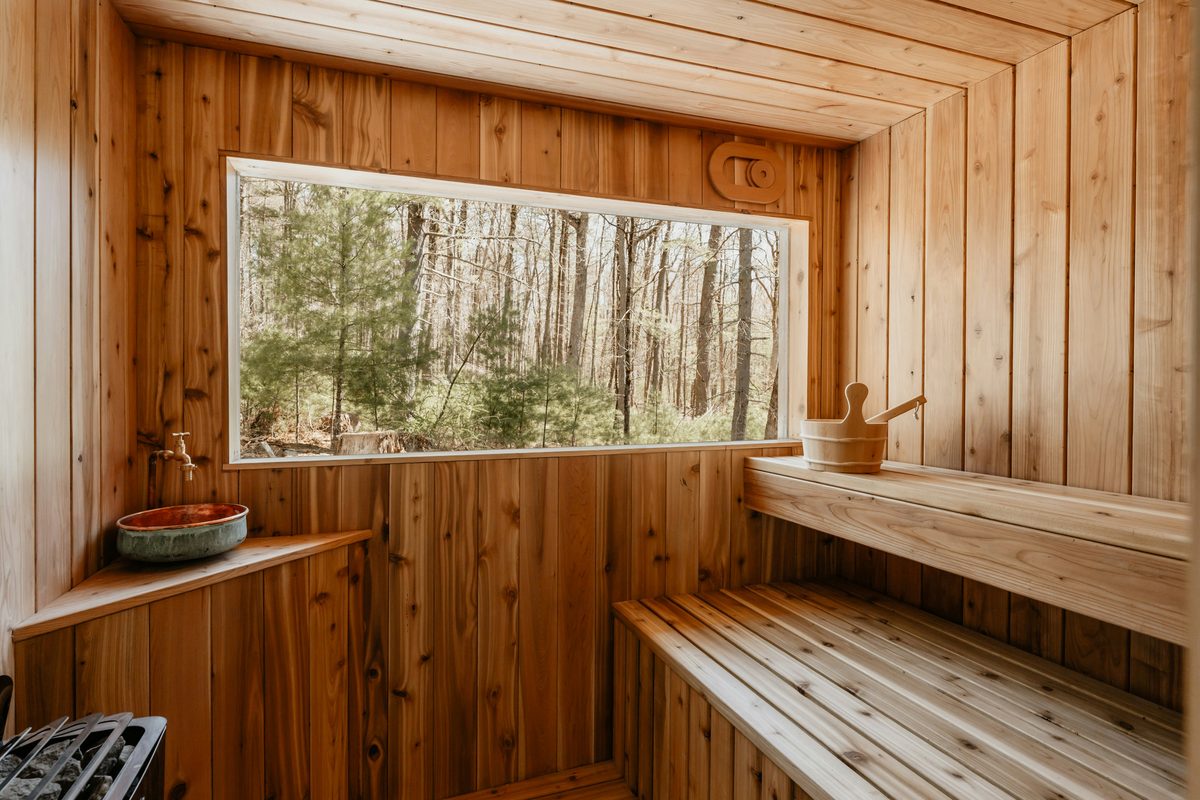
Representative traditional sauna interior. Product specifications come from the current listing and manual.
Short answer
Choose the sensation you will actually use
Traditional sauna
A heater warms the room and a mass of sauna stones. When the heater manual permits it, water on the hot stones produces loyly: a brief rise in humidity and felt heat.
Start here when: hot air, stones, loyly, group use, or an outdoor sauna is central to the purchase.
Infrared sauna
Emitters warm the occupant and surfaces while the room runs at a lower air temperature than a Finnish-style sauna. A conventional infrared cabin has no rock-filled heater and no loyly.
Start here when: a lower-temperature indoor session and a compact exact-model installation fit the household better.
The decision factors that change the project
| Factor | Traditional | Infrared | What to verify |
|---|---|---|---|
| Heat experience | Heated room, hot stones, and optional loyly | Radiant heat at a lower room temperature | Try both formats before buying when possible. |
| Published research settings | Often 80-90 C in the 2018 review | Often 45-60 C in the 2018 review | Research protocols are not instructions for a consumer product. |
| Water on stones | Yes, when the exact heater manual permits it | No conventional rock-and-water system | Follow the exact heater or cabin manual. |
| Electrical path | Often hardwired for a home electric heater; wood-fired is separate | Some compact cabins use 120 V; larger models vary | Circuit, outlet, controls, disconnect, panel, and local code. |
| Location | Indoor or outdoor when the room and heater are approved for it | Many compact cabins are indoor-only | Product rating, floor, clearances, ventilation, moisture, and access. |
| Maintenance | Room cleaning plus heater, stones, controls, and exterior care | Cabin cleaning plus emitters, controls, glass, and electronics | Current maintenance schedule, parts, warranty, and support. |
Current format examples
Compare exact products, not generic categories
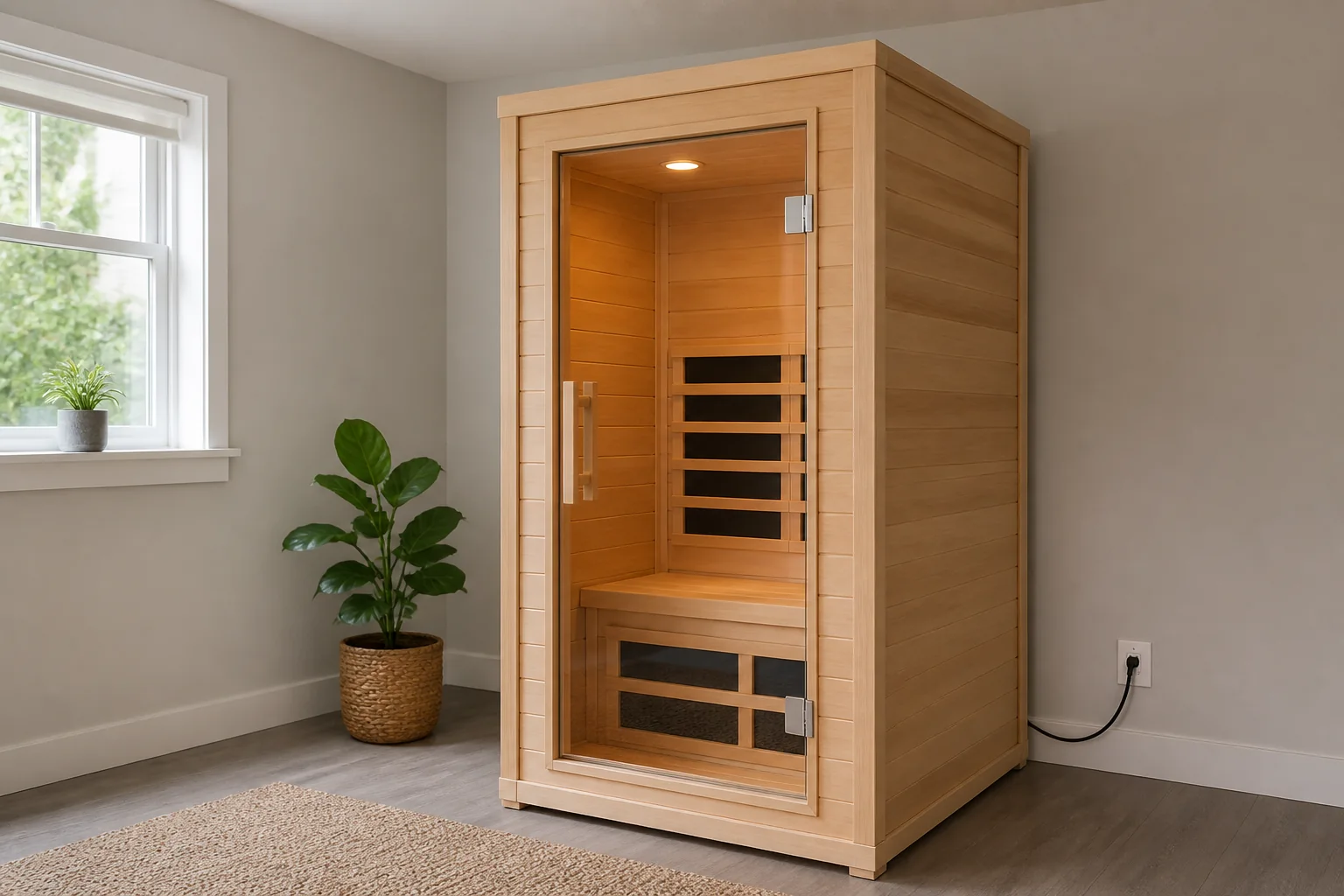
Compact indoor infrared path
Dynamic Martin 1-2 Person
The current authorized-dealer page lists this 2026 indoor-only cabin with six emitters, a 120 V / 15 A electrical path, a dedicated outlet recommendation, a 250-pound cabin weight, and a maximum air-temperature claim of 140 degrees F. Its person count is a seller label. Confirm usable interior dimensions, circuit instructions, delivery, assembly, warranty, and availability.
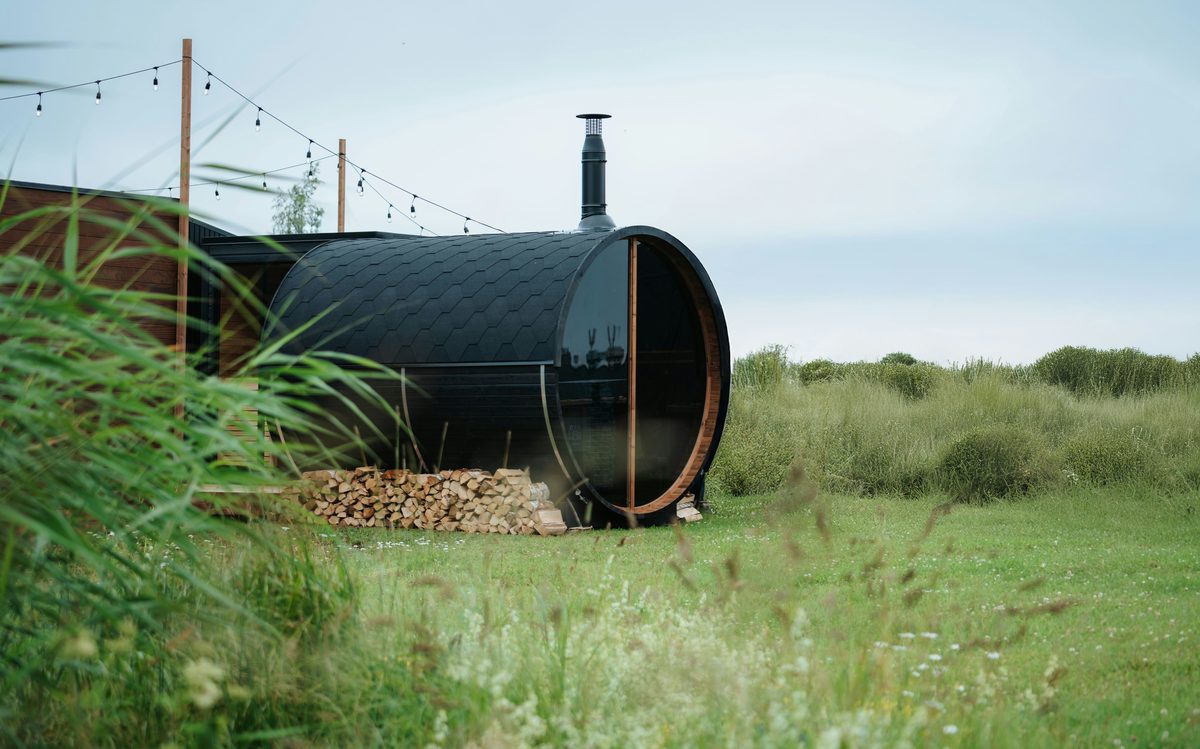
Outdoor traditional path
Almost Heaven Pinnacle 4 Person
The current manufacturer page lists a 6 kW, 240 V / 30 A hardwired heater path, separate 110 V / 15 A lighting service, two 63 1/4-inch-long benches, and an outdoor barrel room. Four is the published maximum, not our comfort rating. Confirm the selected heater, controls, glass, foundation, exterior treatment, freight, offload, assembly, and warranty.
View Current Pinnacle ListingEvidence boundary
Do not buy either format from a disease claim
A 2018 systematic review included both Finnish-style and infrared studies. It found too much variation in study quality, protocols, populations, temperature, frequency, and outcomes to recommend a specific sauna type or routine for a specific health result. It also found insufficient evidence to distinguish particular health differences between repeated Finnish-style and infrared bathing.
A 2026 heat-therapy review adds an important correction to common infrared marketing: recent experiments found that heat penetration diminished with tissue depth, and one 45-minute far-infrared session did not produce an appreciable rise in core temperature. That does not make infrared ineffective as a comfort experience. It means claims such as "deeper detox" are not a responsible buying criterion.
Six checks before choosing the format
Try the heat
Use a reputable traditional sauna and infrared cabin before spending thousands. Preference is difficult to infer from a temperature table.
Measure the users
Compare bench length, depth, levels, and emitter placement with the actual users and desired seated or reclining posture.
Confirm the room
Check indoor or outdoor rating, exterior dimensions, floor, clearances, ventilation, moisture, ceiling, access, and service space.
Confirm power
Use the exact manual. Have a qualified electrician verify the circuit, panel capacity, outlet or hardwire path, controls, disconnect, and permits.
Compare total cost
Add freight, offload, base, electrical work, assembly, weather protection, ventilation, accessories, maintenance, and tax.
Audit the claims
Separate product specifications from seller wellness language. Ask for the test method, certification, warranty, and evidence behind any unusual claim.
Sources checked
- Clinical Effects of Regular Dry Sauna Bathing: A Systematic Review
- Heat Therapy: Targeting Health, Disease, and Disability (2026 review)
- Authorized-dealer Dynamic Martin product page and manual link
- Almost Heaven Pinnacle product page and construction manual
- Harvia heater-stone use and maintenance guidance
Infrared and traditional sauna questions
Is infrared or traditional sauna better?
Neither format is universally better. Traditional sauna is the clearer fit for people who want heated air, hot stones, and water-generated loyly. Infrared is the clearer fit for people who prefer a lower room temperature and can use an exact indoor cabin that matches their space and electrical service.
Does infrared sauna have better health benefits?
Current research does not establish infrared as medically superior to traditional sauna. A systematic review found insufficient evidence to recommend a specific sauna type, temperature, frequency, or duration for a specific health outcome. Treat disease or treatment claims as medical questions, not product-selection shortcuts.
Can an infrared sauna use a standard outlet?
Some compact models can. The current Dynamic Martin example lists 120 V and 15 A service with a dedicated outlet recommendation. Larger infrared cabins can have different requirements. The exact product manual, outlet, circuit, room, and local code control.
Can you pour water in an infrared sauna?
Not unless the exact manufacturer explicitly allows it. A conventional infrared cabin does not use a rock-filled sauna heater for loyly. Keep water away from emitters and electronics and follow the product manual.