
Sauna planning guide
Sauna lighting: choose the whole system, not just a bulb
Reviewed August 15, 2026 · Backyard Sauna Pro
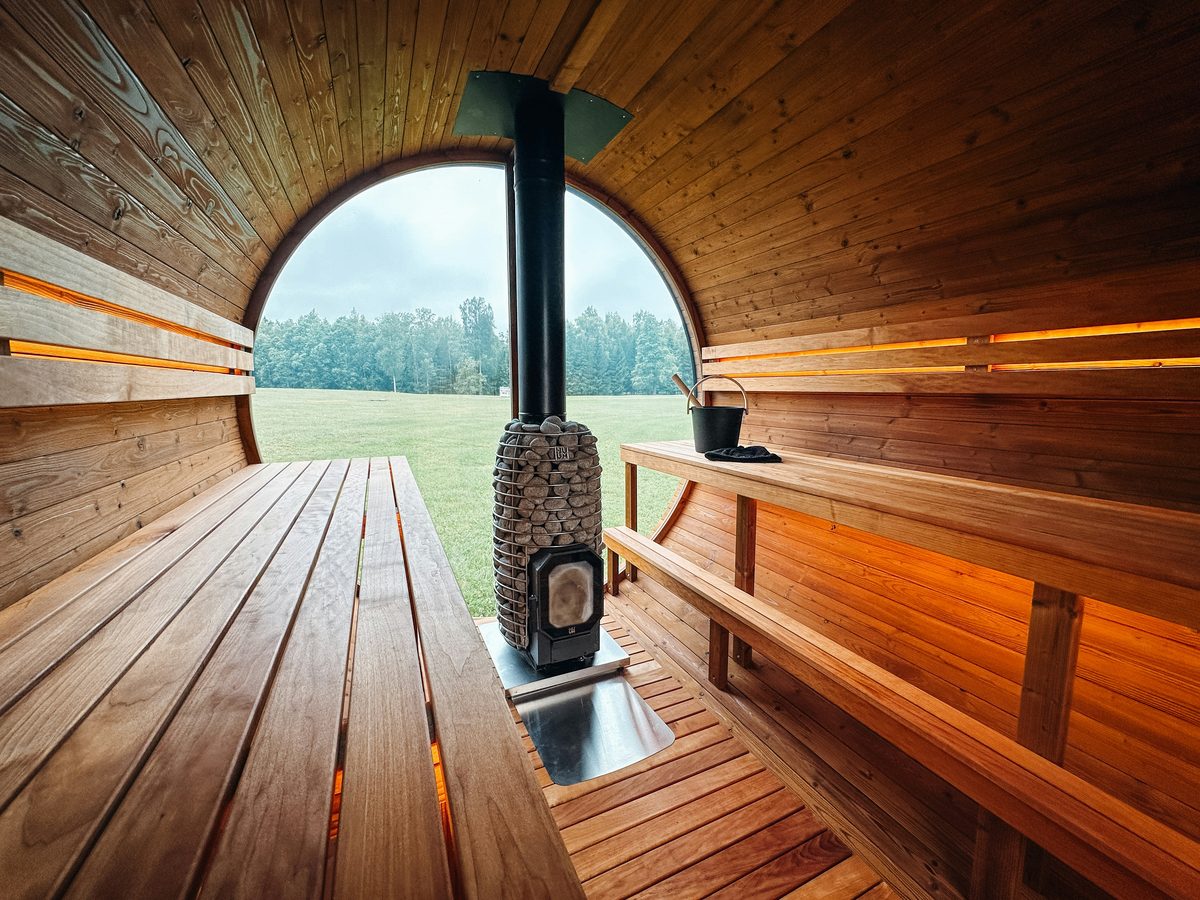
A sauna light is a system: fixture or light engine, cable, connectors, driver or transformer, controls, mounting location, and wiring method. One compatible component does not make the rest of the assembly compatible.
Do not select a light from an IP number, voltage, or marketing phrase alone. The manufacturer should document the complete configuration for the exact heat, moisture, and installation location.
Do not improvise a sauna lighting kit
A generic LED strip, household recessed light, bathroom fixture, power supply, connector, or adhesive may fail at a different temperature than the visible light component. Low voltage is not a substitute for a documented sauna system.
Do not copy a mounting location from a photo. A product approved above a heater or in a ceiling can have very different construction and limits from one designed only for a lower wall or indirect recess.
Three system types to compare
| System | Why consider it | What must be documented |
|---|---|---|
| Sauna-maker lighting kit | Designed around a named cabin, heater, or control family. | Exact compatible models, included parts, permitted locations, cable routing, driver and control requirements. |
| Purpose-built fixture or LED system | Useful for a custom room when the maker publishes installation data. | Ambient-temperature range, wet-area or IP classification, mounting orientation, approved location, cable and power-supply pairing. |
| Fiber-optic system | Can keep the powered light source away from selected hot-room locations when designed that way. | Projector location, fiber routing, bend limits, end fittings, service access, room and steam compatibility. |
Seven checks before you buy
- Intended environment: the maker should name sauna, steam room, or the exact cabin system rather than only "waterproof" or "bathroom."
- Ambient-temperature limit: verify it for the actual installation location, not just the room's target temperature.
- Moisture classification: use the product's documented IP or wet-area classification together with its location instructions. No single IP number is a universal sauna rule.
- Complete component match: confirm fixture, lamp or module, cable, connector, driver, transformer, dimmer, and controls are approved together.
- Installation orientation and location: wall, ceiling, under-bench, above-heater, and recessed placements are not interchangeable.
- Electrical and listing requirements: have a qualified electrician check the wiring method, protection, switching, equipment listings, and local requirements.
- Service access: drivers, splitters, connectors, and controls should remain accessible where their instructions permit.
Research the category
Compare sauna-specific lighting components
The previous product ID on this page no longer resolved reliably, so this opens a current category search. A search result is not an installation approval: verify the complete system with the manufacturer and electrician.
Compare Current Amazon ListingsPlan lighting before paneling
Harvia advises planning light, heater, control, and sensor wiring before wall panels go on. That is the right sequence: choose the system, confirm approved locations, coordinate the electrical design, and preserve service access before finishes hide the routes.
For an existing sauna, avoid cutting into panels until the product instructions and electrician have established the route, backing, clearances, moisture details, and accessible component locations.
Manufacturer references
- Harvia paneling and wiring guidance — plan sauna light wiring before paneling.
- Harvia RGBW LED tube — an example with model-specific temperature, cable, voltage, and mounting data.
- Harvia warm-white LED spot — an example showing location, temperature, IP, transformer, and control details.
- Dundalk LeisureCraft light instructions — manufacturer-directed installation by a licensed electrician.
FAQ
Can I use a regular LED light in a sauna?
Use only a complete system documented for the intended sauna environment and location. A generic household or bathroom rating is not enough.
Is a low-voltage kit safe to install myself?
Low voltage does not establish heat, moisture, component, or installation compatibility. Follow the matched system instructions and use a qualified electrician where required.
Where should the lights go?
Only where the exact product and sauna instructions allow. Heat and moisture exposure vary sharply by location.