
Material decision guide
Cedar vs Hemlock Sauna Wood
Reviewed August 2026 · Backyard Sauna Pro
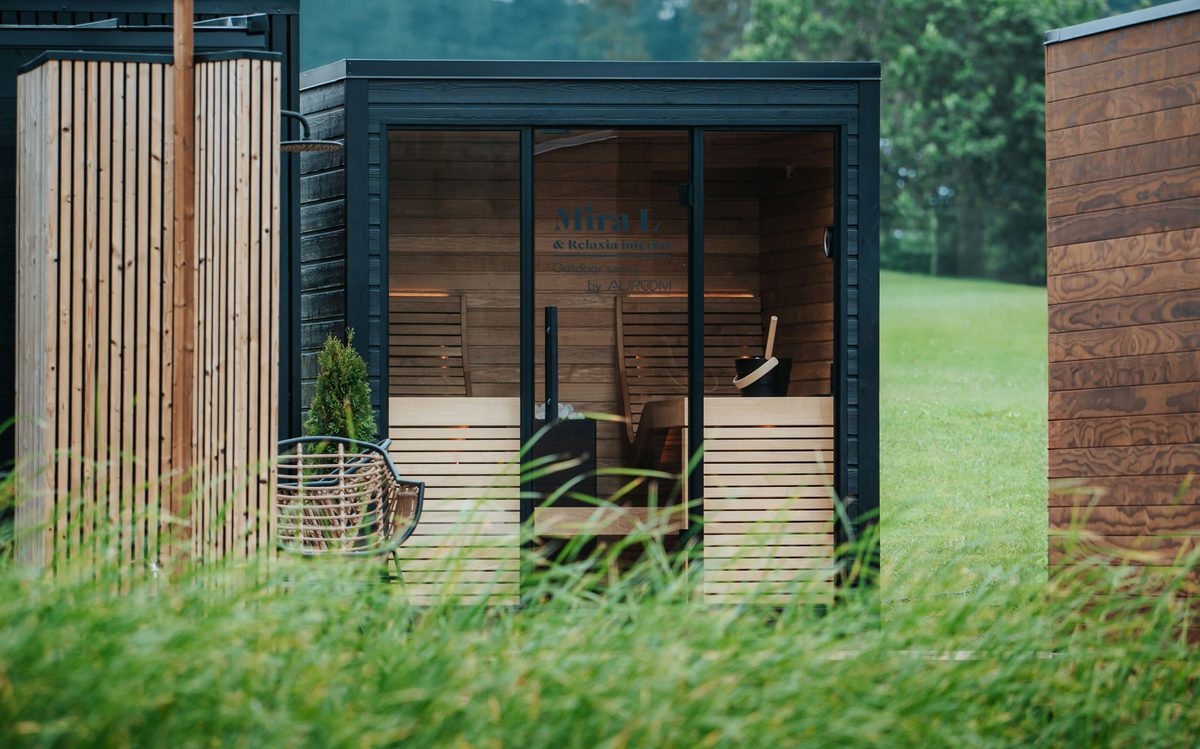
The useful answer is not simply "cedar outdoors, hemlock indoors." A sauna kit is a complete assembly: interior cladding, framing, insulation, weather protection, fasteners, ventilation, benches, and maintenance all affect durability.
Western red cedar gives you lower density, natural heartwood decay resistance, and a distinct aroma. Western hemlock is denser and harder, usually paler, and less aromatic. Choose after confirming the exact species, grade, moisture content, surface quality, and construction details.
Short answer
Choose the better-built sauna, not just the preferred wood label
For outdoor projects, prioritize the roof, base, drainage, weather barrier, and service access. For the hot room, prioritize dry, smooth, suitable-grade material and manufacturer-approved installation details.
Build your sauna project briefEvidence-based comparison
| Property | Western red cedar | Western hemlock |
|---|---|---|
| Density and hardness | Lighter and softer | Denser and harder in USDA tables |
| Natural decay resistance | Heartwood is valued for natural resistance | Do not rely on natural durability for weather exposure |
| Dimensional movement | Known for dimensional stability | USDA describes shrinkage as moderately high |
| Appearance | Warm color with more visible variation | Typically pale with a more uniform look |
| Scent | Distinctive and noticeable | Usually milder |
Evidence source: the USDA Forest Products Laboratory's Wood Handbook, including its species, moisture, mechanical-property, and biodeterioration chapters. Natural properties vary by species, grade, heartwood versus sapwood, and individual board.
When cedar is the stronger candidate
- You want a lighter wood with a warm, varied appearance.
- You like the characteristic aroma and have confirmed it is comfortable for your household.
- Natural heartwood decay resistance is useful within a properly weather-managed outdoor assembly.
- The supplier clearly identifies the species, grade, and construction details.
When hemlock is the stronger candidate
- You want a pale, comparatively uniform appearance.
- You prefer less wood aroma.
- You value a denser, harder surface and the kit protects the material from exterior moisture.
- The supplier documents kiln drying, board quality, and the full wall and weather assembly.
Five questions to ask the seller
- What exact species and grade are used for walls, benches, framing, and exterior surfaces?
- Is the listed wood heartwood, sapwood, or a mix, and what moisture target is used before assembly?
- How are knots, splinters, fasteners, and high-contact bench surfaces handled?
- For an outdoor model, what protects the roof, walls, base, and penetrations from water?
- Which interior and exterior cleaning or treatment products does the manufacturer permit?
Compare the total project, not a wood surcharge
A better roof, base, ventilation plan, warranty, or installer may matter more than the species label. Put the full quotes side by side before deciding.
Compare total project costsFAQ
Is cedar or hemlock better for a sauna?
Neither is automatically better. Cedar favors natural decay resistance, low density, and aroma; hemlock favors a denser, paler, less aromatic surface. Construction quality remains decisive.
Can hemlock be used in an outdoor sauna?
Yes, if the complete assembly protects it appropriately. Interior wood species alone does not make a sauna weatherproof.
Should sauna wood be finished?
Follow the sauna and product manufacturers' instructions. Do not use an ordinary interior finish in the hot room unless it is explicitly approved for that location and temperature.