
Materials planning
Sauna Wood: Choose by Surface, Not by Species Alone
Reviewed August 2026 · 8 min read
The right bench wood is not automatically the right wall, frame, floor, or exterior. Start with the surface. Then compare the exact lumber grade, moisture condition, profile, fasteners, finish, climate, and maintenance plan.
The useful answer
Match the wood to the job.
Benches need comfortable, smooth contact surfaces. Interior paneling must tolerate repeated heat and moisture cycles. Framing carries loads behind the finish. Outdoor cladding faces rain, sun, snow, and drainage details. One species can serve several roles, but no species removes the need for good design and drying.
Choose each surface separately
| Surface | What matters | Examples in current sauna systems |
|---|---|---|
| Bench tops and backrests | Smooth contact, comfortable surface temperature, stable boards, clean edges, and maintainability. | Aspen, alder, abachi, cedar, spruce, and thermally modified options. |
| Walls and ceiling | Profile, expansion, moisture cycling, appearance, knots, resin behavior, and system details behind the paneling. | Spruce, aspen, alder, cedar, hemlock, and thermally modified woods. |
| Bench structure | Load path, spans, fastener placement, ventilation, access for cleaning, and concealed support. | Manufacturer-specific structural members with a separate finished bench surface. |
| Building frame | Structural design, insulation, air and vapor control, local code, and separation from the hot-room finish. | Conventional framing or a tested panel system, as specified for the project. |
| Outdoor exterior | Rain shedding, roof details, drainage, ground clearance, ultraviolet exposure, finish schedule, and climate. | Project-specific siding, solid timber, or thermally modified cladding. |
Bench wood: comfort depends on the exact board
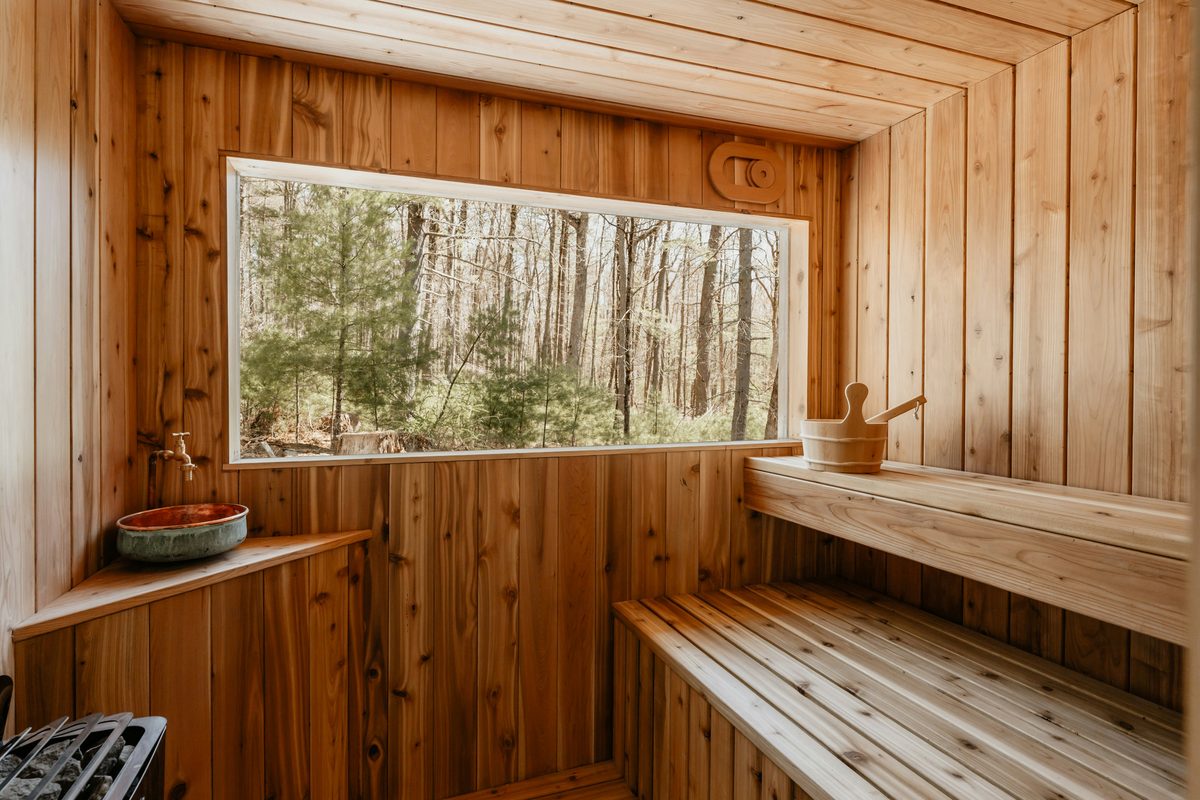
Aspen is common because it is light, smooth, and used by established sauna manufacturers for seating. Harvia, for example, pairs aspen seating boards with a spruce bench frame in a current indoor cabin. SAWO lists both aspen and cedar bench timbers, and Finnleo currently offers abachi in several interior configurations.
That does not make every board interchangeable. A species can include different grades, growth patterns, knots, moisture levels, profiles, and thermal treatments. Ask for the exact bench-board specification and a sample when appearance or touch matters.
Bench questions
- Is the material sold and documented for sauna bench use?
- Are exposed edges eased and fasteners concealed from skin contact?
- What board grade and knot standard will be delivered?
- How will the bench dry, and can it be lifted or accessed for cleaning?
- Which maintenance or sauna-specific treatment is allowed?
Walls and ceilings: the assembly matters more than the label
Current sauna catalogs use spruce, aspen, alder, cedar, hemlock, and thermally modified woods. The panel profile and complete wall assembly matter alongside species. Confirm insulation, air and vapor control, furring or ventilation space, fastening, clearances, and how the paneling can move through heat and humidity cycles.
Do not assume a tongue-and-groove profile creates a waterproof wall. A sauna enclosure must manage heat, moisture, drainage, and drying as a system.
Pine, spruce, and resin need a specific answer
The old version of this guide said to avoid pine. That was too broad. Harvia identifies spruce as an outdoor-sauna option and lists heat-treated pine among responsible bench-material choices. Other manufacturers use spruce in walls, frames, and benches.
The real question is whether the exact board, grade, treatment, knot content, and surface location are suitable. Visible resin pockets or rough knots may be unacceptable on a contact surface even when the broader species appears elsewhere in the room.
Cedar, hemlock, and scent
Western red cedar is widely used in North American sauna interiors and outdoor kits. Hemlock is also offered by established sauna manufacturers. Cedar's color and aroma can be part of the decision, while hemlock is often chosen for a lighter, more neutral presentation.
Do not reduce the comparison to a fixed price percentage. Grade, dimensions, waste, shipping, availability, and whether benches are prebuilt can matter more than the species name. Compare complete material packages on the same scope.
Thermally modified wood
Thermal modification changes wood using controlled heat. Manufacturers use thermally modified alder, aspen, pine, spruce, hemlock, and other species in sauna products. Claims about stability, decay resistance, or moisture behavior should be tied to the specific process and supplier documentation.
It is not a substitute for a roof, drainage, ventilation, proper foundation, or maintenance. Ask which surfaces are modified, whether the color runs through the board, how the material should be fastened, and what finish schedule applies outdoors.
Finishes and treated products
Use only products documented for the intended sauna surface and temperature. Some current sauna products leave interior wood untreated; others permit specific sauna waxes or finishes. An ordinary deck, furniture, or wall coating is not automatically suitable inside a hot room.
Likewise, do not improvise with pressure-treated lumber, composite panels, adhesives, or coatings inside the hot-room envelope. If a product is proposed, ask for written technical documentation covering that exact use. Exterior and below-floor structural applications are separate decisions.
Source checks for a material quote
Harvia bench guidance
Current discussion of material choice, outdoor conditions, maintenance, and sustainable sourcing.
Finnleo custom-room materials
Examples of current wall, ceiling, and bench-material combinations in a complete sauna system.
SAWO panel and bench profiles
Published profiles and dimensions for cedar, aspen, and spruce sauna materials.
Thermory technical downloads
Product sheets, specifications, and drawings for sauna wall and bench materials.
Ask for a material schedule, not a wood nickname
A useful quote identifies species, grade, profile, dimensions, quantity, thermal modification, finish, fasteners, waste, delivery, and the surface where each product will be used.