Sauna Ventilation: How to Do It Right
Updated January 2025 — Backyard Sauna Pro
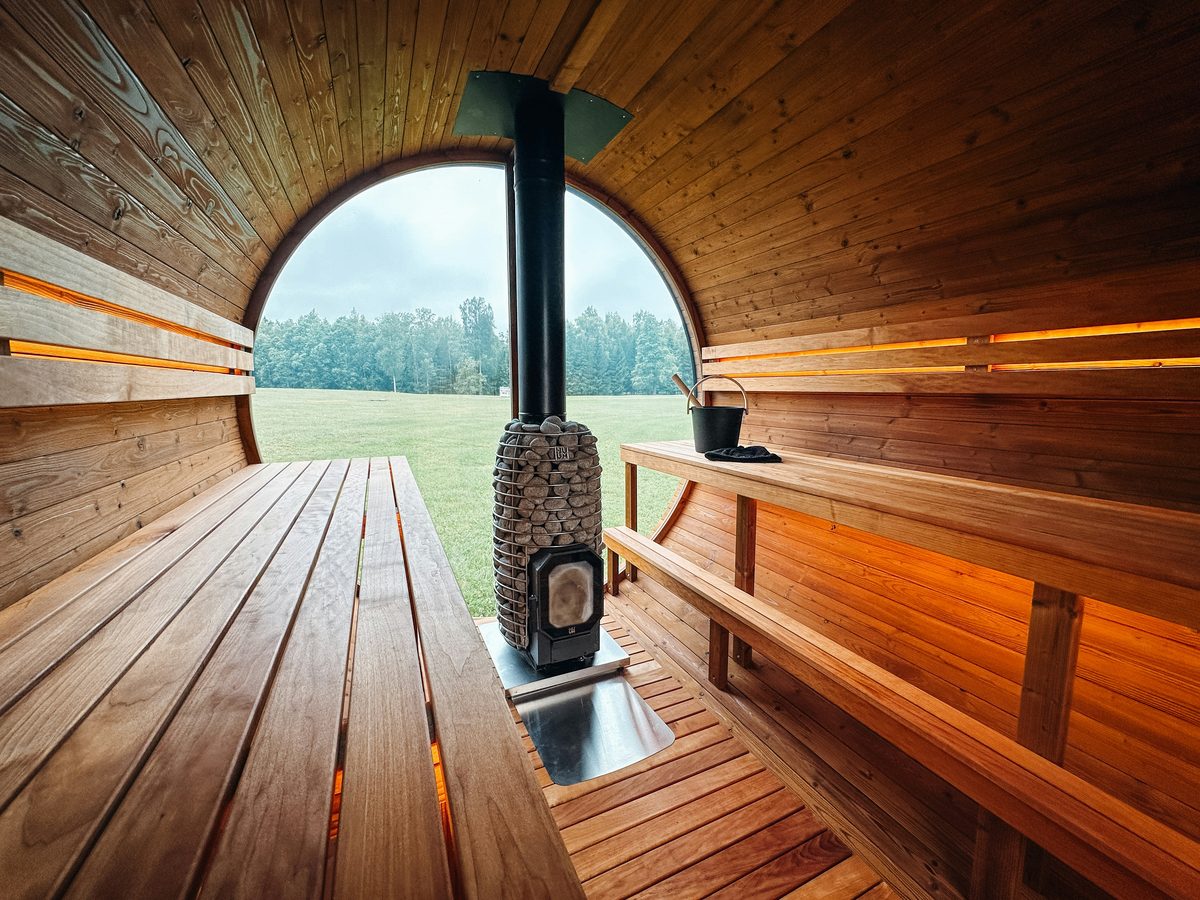
Sauna ventilation gets misunderstood more than almost any other part of the build. High vents are almost universally wrong. Exhaust fans are rarely needed. And a stuffy sauna session is almost always a ventilation problem, not a heater problem.
Here is how it works and how to get it right the first time.
The Goal of Sauna Ventilation
You want fresh oxygen in the room without flushing the heat out. A sauna needs continuous air exchange to stay comfortable for 20-30 minute sessions. Without it, oxygen depletes, carbon dioxide builds up, and the session becomes uncomfortable even at a perfectly good temperature.
The key insight: heat rises. If you put vents at the top of the room, the hot air exits and the room feels cold. If you put vents at the bottom, cool fresh air enters and exits near the floor while the heat layer at bench level stays intact.
Correct Vent Placement
The standard setup
- Intake vent: 6-8 inches above the floor, directly behind or on the same wall as the heater. This draws fresh cool air across the heater, heating it as it enters the room.
- Exhaust vent: 6-12 inches above the floor on the opposite wall. Stale air exits near the floor without disrupting the heat at bench level.
- Both vents adjustable: Adjustable louvers let you control the air exchange rate. Open wider for fresher air; close down to hold heat longer.
Why High Vents Are Wrong
High intake and high exhaust sounds logical — fresh air comes in at the top, exits at the top, the heater at the bottom keeps the room warm. In practice this creates a cross-flow that drags hot air across the benches and out the exhaust. The room temperature drops at bench level and the heater runs constantly to compensate.
A high intake with a low exhaust is even worse — it creates a temperature inversion with the coldest air trapped at floor level while hot air at ceiling level gets exhausted.
Vent Sizing
A 4x8 inch intake vent is appropriate for most residential saunas up to about 300 cubic feet. The exhaust should be slightly larger than the intake — around 6x8 inches or a 4-inch round duct — to prevent back-pressure.
For larger rooms (300+ cubic feet) or saunas used by more than 2 people at once, size up to a 6x8 intake and 8x8 exhaust minimum. Undersized vents create the same stuffiness problem as no vents.
Do You Need a Fan?
Rarely. Natural convection handles air exchange fine in most residential saunas. A fan is worth considering if the sauna is fully underground with no natural pressure differential, or if the exhaust duct runs more than a few feet horizontally before exiting the building. In those cases, a small inline duct fan on the exhaust side can help.
For most above-grade builds, a passive vent system with adjustable louvers is sufficient and simpler. Fans add noise, complexity, and something to maintain.
Barrel Sauna Ventilation
Barrel saunas typically come with two plug-style vents — one near the heater end and one at the far end. Both are usually at floor level. This is the correct setup. Use both; leaving them both plugged makes the barrel stuffy fast. Many users open the intake fully and leave the exhaust half-open as a starting point, then adjust based on how the session feels.
Common Ventilation Mistakes
- Blocking the intake: Objects stored near the heater can partially obstruct airflow. Keep the intake clear.
- Both vents at the same height: Intake and exhaust at the same level on opposite walls creates poor air movement.
- Single vent only: One vent without a second for exhaust just creates dead air with one opening. You need both intake and exhaust.
- No adjustment capability: Fixed vents you can't close or throttle limit your control. Always use adjustable louvers.
FAQ
How should a sauna be ventilated?
Intake low behind the heater, exhaust low on the opposite wall. Both adjustable. This preserves the heat at bench level while exchanging air near the floor.
Where should sauna vents be placed?
Intake 6-8 inches above the floor next to or behind the heater. Exhaust 6-12 inches above the floor on the opposite wall. Both vents low.
Can a sauna be too airtight?
Yes. Oxygen depletes and the session becomes uncomfortable. Proper ventilation is a safety requirement, not optional.