
Sauna and Cold Plunge: Safety and Setup Guide
Reviewed August 2026 — Backyard Sauna Pro
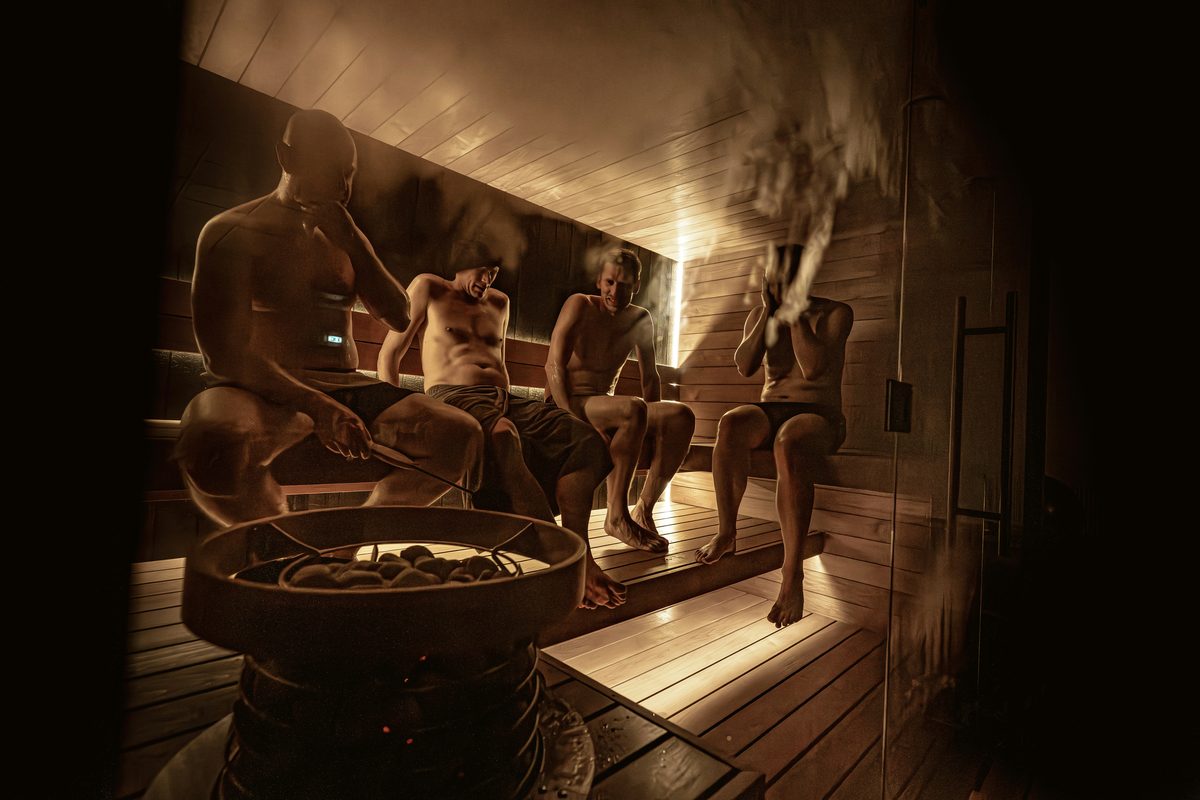
A sauna and a cold plunge are two demanding environments beside each other. The useful design question is not “How extreme can this feel?” It is “Can someone move, enter, exit, recover, and get help without improvising?”
Build the safety path first. Temperature and routine come later, from the exact manuals and the person using the equipment.
What the research does and does not show
A 2026 crossover study compared air cooling with a cooling break that included 90 seconds of 20°C whole-body immersion. Sixteen healthy adults completed two 15-minute sauna bouts. In that controlled setting, cold-water immersion lowered core temperature and heart rate at the end of the second sauna bout and made the second bout feel more tolerable.
That study did not establish the best home protocol. It did not test older adults, children, people with medical conditions, solo use, colder water, longer immersion, or a broad range of sauna temperatures.
A smaller 1989 study of nine men found that alternating sauna with cold or cool exposure produced the most intensive cardiac strain among the tested conditions. The responsible conclusion is narrow: heat and cold change cardiovascular demand, and the details matter.
A safer transition plan
1. Make cooling optional
Every route from the sauna should include a stable room-temperature place to sit or lie down. A plunge should never be the only cooling option. Someone who feels unsteady, confused, nauseated, unusually short of breath, or otherwise unwell should not enter the water.
2. Measure instead of guessing
Use a working water thermometer and the sauna's own thermometer. Record the actual conditions. Do not label water “beginner,” “intermediate,” or “advanced”; the same temperature can produce a different response after heat, with deeper immersion, or in another person.
3. Keep the face out and the exit simple
Do not combine a breath hold, head submersion, or jump with a first cold exposure. Use steps or a low entry, a rigid handhold, a non-slip surface, and enough clear space for another adult to assist. The cover must be completely removed before entry.
4. Do not use the plunge alone
A nearby responsible adult should be able to see the user and help without entering the water. Keep phones and distractions away from the supervising person. Never allow a child unsupervised access to a filled tub.
5. End the session when control changes
Exit at the first sign that breathing, coordination, speech, judgment, grip, balance, or comfort is deteriorating. A timer cannot override those signs. Dry off, warm gradually, and seek medical help when symptoms are severe or do not resolve.
Site and equipment checklist
| Decision | What to verify |
|---|---|
| Foundation | Filled operating weight, required levelness, load path, waterproofing, drainage, and freeze movement. |
| Electrical | Exact voltage, amperage, dedicated-circuit and GFCI requirements, disconnects, cord limits, equipment clearances, and local code. |
| Entry and exit | Step geometry, rigid handhold, slip resistance, lighting, cover removal, and assisted-exit space. |
| Water system | Filtration, circulation, approved sanitizer, testing method, filter schedule, drain route, refill procedure, and stagnant-water response. |
| Climate | Chiller operating range, sun exposure, ventilation, freeze protection, winterization, and warranty exclusions. |
| Access control | Locking cover or barrier, child access, service access, emergency path, and supervision rules. |
Electrical and water cannot be separate afterthoughts
A current Plunge setup guide, for example, specifies a flat supporting surface, equipment clearances, a GFCI outlet, and model-dependent circuit requirements. Those details belong to that product. Another tub or chiller can require something different.
Give the exact sauna and plunge manuals to a qualified electrician before ordering. Do not assume both products can share a circuit. Keep electrical equipment and connections dry, and follow the selected product's requirements for GFCI testing, outlet distance, extension cords, bonding, and service access.
A recirculating plunge also needs a water-care plan. Follow the manufacturer-approved sanitizer and testing procedure, local rules, and any health-department requirements. CDC's public-venue code is not a residential instruction manual, but it is a useful reminder that filtration, circulation, disinfection, testing, and drain safety are systems, not accessories.
Stock tank, chiller tub, or natural water?
Stock tank
A stock tank removes the integrated chiller, but it does not remove drowning, access, sanitation, drainage, weight, corrosion, sharp-edge, or freeze risks. Confirm that the manufacturer allows the intended human-use setup. Add a secure cover and a water-change plan before filling it.
Purpose-built tub with chiller
Compare the filled weight, access method, listed electrical requirements, circulation and sanitation system, operating-noise location, ambient-temperature range, winterization steps, service access, replacement filters, warranty labor, and return freight. “Self-cleaning” still requires a written maintenance schedule.
Lake, river, or ocean
Natural water adds current, depth, waves, submerged hazards, water quality, weather, and a less controlled exit. It is not a substitute for a measured home tub. CDC notes that most adult fatal and nonfatal drownings occur in natural or open water. Treat local conditions and appropriate life-jacket guidance as separate safety decisions.
Quote questions for a cold-plunge seller
- What is the exact model, manual revision, operating weight, and required support surface?
- Which circuit, GFCI, outlet location, cord, disconnect, bonding, and clearance requirements apply?
- What are the verified operating and storage temperature ranges?
- How is the water filtered, circulated, disinfected, tested, drained, and refilled?
- Which chemicals are approved, and which void the warranty?
- What prevents suction entrapment, and which drain or suction-fitting standard applies?
- How does a user exit if the pump, controller, app, or power fails?
- What is excluded from the warranty, including freezing, water chemistry, freight, and labor?
Primary and official sources
- Owen et al. (2026): sauna cooling breaks with and without cold-water immersion
- Kauppinen (1989): circulatory responses to sauna, shower, and ice-water immersion
- CDC: current Model Aquatic Health Code edition
- CDC: drowning prevention and natural-water safety
- CPSC: home electrical safety around pools and spas
- Plunge: example of model-specific setup requirements
FAQ
Should a cold plunge come before or after a sauna?
There is no proven universal best sequence. If it follows the sauna, treat the plunge as a separate exposure. Measure conditions, keep an easy exit, and include a room-temperature recovery option.
How cold and how long should it be?
Do not use a generic table. Follow the exact equipment instructions and individualized medical guidance when appropriate. End the exposure when breathing, coordination, judgment, or comfort changes.
Can the plunge share the sauna circuit?
Do not assume it can. A qualified electrician should review both current manuals, the existing panel, local code, GFCI requirements, and the intended equipment locations.